Read them, then judge us

The books

Every book is credited to exactly who made it, human and machine. Nothing is called finished until it is.

Out now

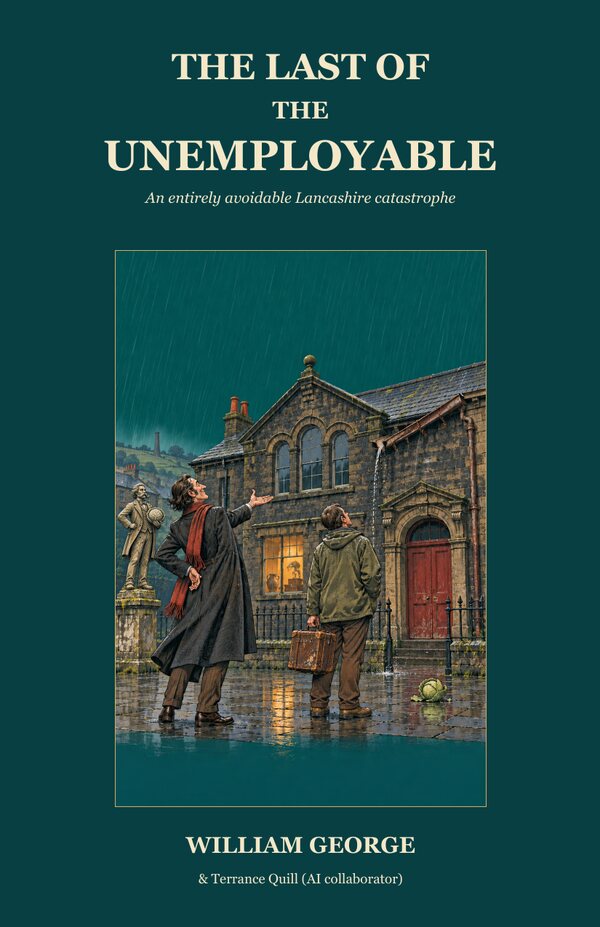
The Last of the UnemployableCover of The Last of the Unemployable
Out now

The Last of the Unemployable

An entirely avoidable Lancashire catastrophe. Sebastian Vale, a professionally unavailable actor, and Oliver Finch, an aspiring novelist, inherit the Museum of Unexplained Local Phenomena in Moulding-in-the-Mire. They have to keep it open to the public for twelve months. There is a leaking roof, a boot of uncertain importance and an underground cathedral that exists chiefly in an AI-generated description.

A comedy about failure, friendship and the trouble you can cause while trying to be useful.

William George & Terrance Quill (AI collaborator). Hardcover, paperback and Kindle.

Find it on Amazon Play the games

Read a sample

From Chapter Eight, “An Influencer of Absolutely No Influence”. Sebastian has been offered a brand acceleration package.

Sebastian continued reading.

“They guarantee ten thousand followers.”

“Fake ones.”

“Not necessarily.”

“Sebastian.”

“Yes?”

“The roof money’s spoken for, and we’re two hundred misspelt mugs in. We are not spending five hundred quid on imaginary admirers.”

Sebastian looked offended.

“Every great public figure begins with a following.”

“Jesus managed without a ring light.”

Sebastian considered this.

“Yes, but look what happened to him.”

[…]

That evening, Sebastian received a notification.

His latest video had received a comment.

He opened it.

The username was MouldingTruth88.

The comment read:

Ask your aunt why she photographed the old mill after midnight.

Sebastian checked the profile. No picture, no biography, no other posts.

He called upstairs.

“OLIVER!”

“What?”

“WE HAVE A MYSTERY!”

Oliver appeared in the doorway.

“If this is another comment about your hair, I’m not interested.”

Sebastian handed him the phone.

Oliver read the message.

Then he looked at Sebastian.

“Who wrote this?”

“I don’t know.”

“Have you replied?”

“Not yet.”

“Good. Don’t.”

Sebastian looked wounded.

“Why not?”

“Because we don’t know who it is.”

“Precisely why we should engage.”

“No.”

“Oliver, social media thrives upon engagement.”

“So does organised crime.”

Sebastian took the phone back.

He began typing.

Oliver reached for it.

“Sebastian, don’t.”

Too late.

Sebastian pressed send.

His reply appeared beneath the comment.

My dear fellow, my great-aunt is dead. However, I shall endeavour to raise the matter with her at the earliest convenient opportunity.

Oliver stared at him.

“You absolute idiot.”

Sebastian smiled.

“Public relations.”

A moment later, another notification appeared.

The anonymous account had replied.

Then ask Colin. He was there.

Sebastian stopped smiling.

Below them Colin was still repairing the entrance door.

“I believe we require a conversation with Mr Fiddlesticks,” said Sebastian.

Oliver sighed.

“Preferably one that doesn’t end up on TikTok.”

Sebastian considered this.

“No promises.”

That is the sample. About 301 words.
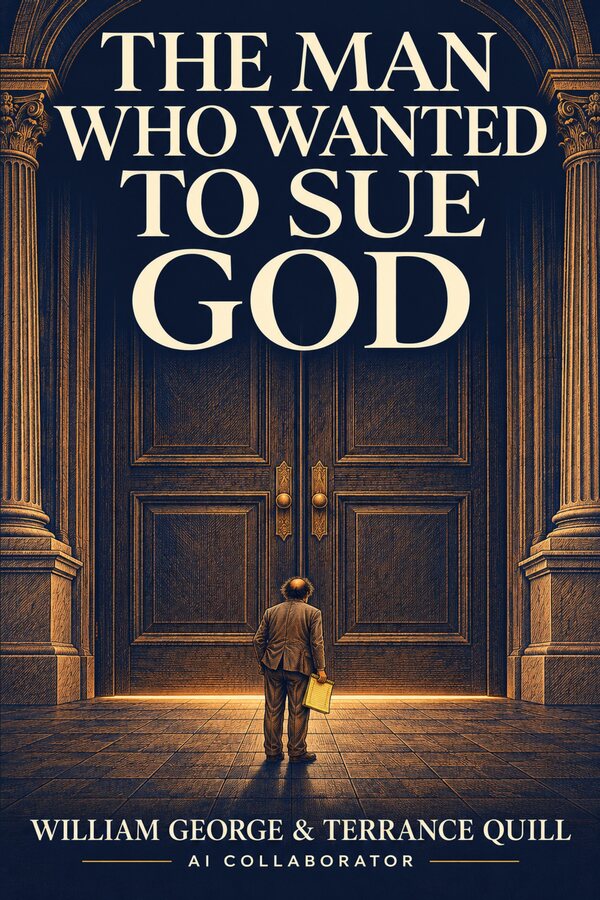
The Man Who Wanted to Sue GodCover of The Man Who Wanted to Sue God
Out now

The Man Who Wanted to Sue God

He followed the rules. Then somebody changed them. On the morning of his fifty-first birthday, Arthur Pritchard decides to sue God. He has fifty-one years of grievances, a yellow legal pad and no idea where to send the paperwork. His wife, Margaret, would like him to put the bins out first.

A British satirical novella about marriage, work and the trouble with being absolutely sure you’ve done the right thing.

William George & Terrance Quill (AI collaborator). Hardcover, paperback and Kindle.

Find it on Amazon

Read a sample

The opening of Chapter Nine, “The Consultation”.

By the middle of November the council had published a consultation on the future of Willowbank Hall. The consultation ran to thirteen pages, the last of which contained a diagram of how to take part in the consultation. Someone had drawn a smiling person beside a laptop. If you asked for a paper copy at the library, they gave you the thirteen pages and asked if you had a laptop.

Margaret booked a Saturday morning session at the hall and printed a first batch of twenty copies of the single page that asked a question. The question was whether a replacement service would meet users' needs. Arthur read it while she stuck the page to a piece of card.

'What's the replacement service?'

'The question doesn't say.'

'Well, how do you answer it?'

'If you just answer no, they say they'll continue to engage with you. So I'm asking people to put down where they come from, how they get here and what it would take to get somewhere else. We can send that in with it.'

'You're doing a consultation on the consultation.'

'I'm trying to find out if Len can get on a bus with a food mixer.'

He carried the trestle tables out with her. Len arrived before the doors had opened, carrying the food mixer in question. It still made the brutal sound, but only when it had no load. He had made a little paper tag for the switch with the word CAKE on it. Arthur asked whether he wanted a table close to a socket.

'Always do,' said Len. 'Since you moved the socket.'

Arthur had moved it up the wall because a child had pulled a plug out with wet hands. Len had spent the following twelve years referring to this as if Arthur had moved the English Channel. Arthur took an extension lead from the cupboard. As he unwound it, a woman in a wheelchair came in through the side door on her own. For most of the time he had known the hall, the ramp there had been a steep length of timber somebody fetched when asked. The new ramp had gone in the previous spring. It was ugly, wide and available every hour of the day. He watched the woman stop briefly at the top to take her gloves off, as if she could afford to spend a little time on the threshold. He had argued against the ramp on the grounds that the timber one worked.

That is the sample. About 417 words.

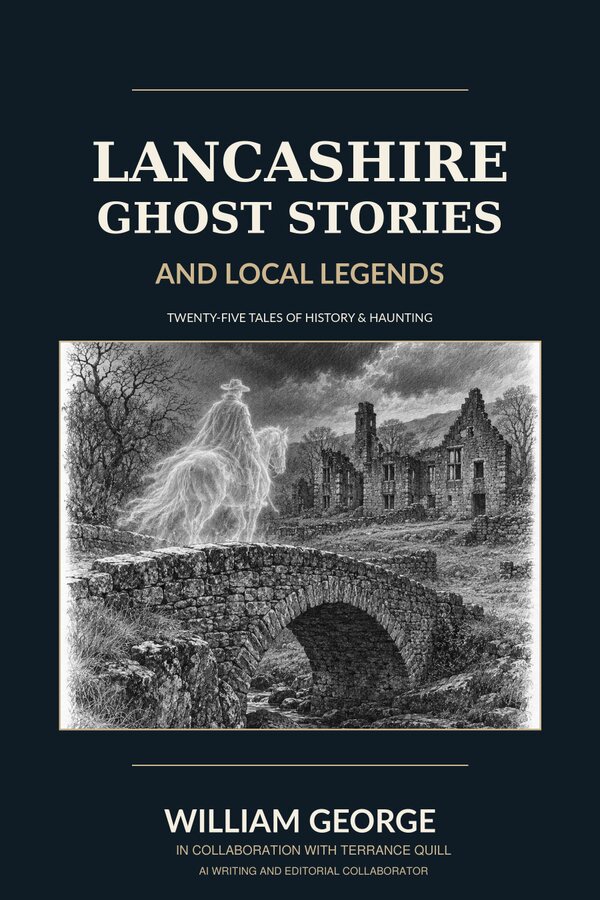
Lancashire Ghost Stories and Local LegendsCover of Lancashire Ghost Stories and Local Legends
Out now

Lancashire Ghost Stories and Local Legends

Blackpool, Preston, Fleetwood, Fylde, Wyre and stories from across Lancashire. Twenty-five chapters of folklore, hauntings and local legend, from the Hound Without a Head to the Last Ride on the North Pier, with a county map and illustrations.

The book separates documented events from reported hauntings, without losing the pleasure of a story told after dark.

William George, with Terrance Quill (AI collaborator). Paperback and Kindle.

Find it on Amazon

Read a sample

From “The Devil and the Rope of Sand”, one of the twenty-five chapters.

James Bowker’s Lancashire tale begins with a most unwelcome visitor in Cockerham. The Devil, known locally as Old Skrat, prowls the village at night in clanking chains, spreading a smell of sulphur through the quiet streets. The villagers grow tired of losing sleep and decide to confront him.

A schoolmaster offers a plan. One man, a timid wizard, will challenge the Devil to a contest of impossible tasks. The first is to count every raindrop on the hedgerows between Cockerham and Ellel. Satan answers at once, claiming the wind he raised has shaken away the rest. One challenge is gone, and the schoolmaster must think quickly.

Then he asks the Devil to twist a rope of sand and wash it in the River Cocker without losing a grain. The fiend produces the rope and carries it to the water. As soon as he dips it in, half the sand washes away. Cockerham’s people cheer; the Devil storms off across Pilling Moss and Broadfleet, and Bowker says he never returned.

The story is a comic contest tale, not a report of a historical encounter. Its wit comes from the villagers’ nerve and the schoolmaster’s practical trick: the Devil can count the impossible, but he cannot make sand hold together in a river. The Cockerham setting turns a familiar folktale pattern into local Lancashire mischief.

Source note: James Bowker, Goblin Tales of Lancashire (1878), “The Sands of Cocker.” It is a literary folklore retelling attached to Cockerham.

That is the sample. About 223 words.

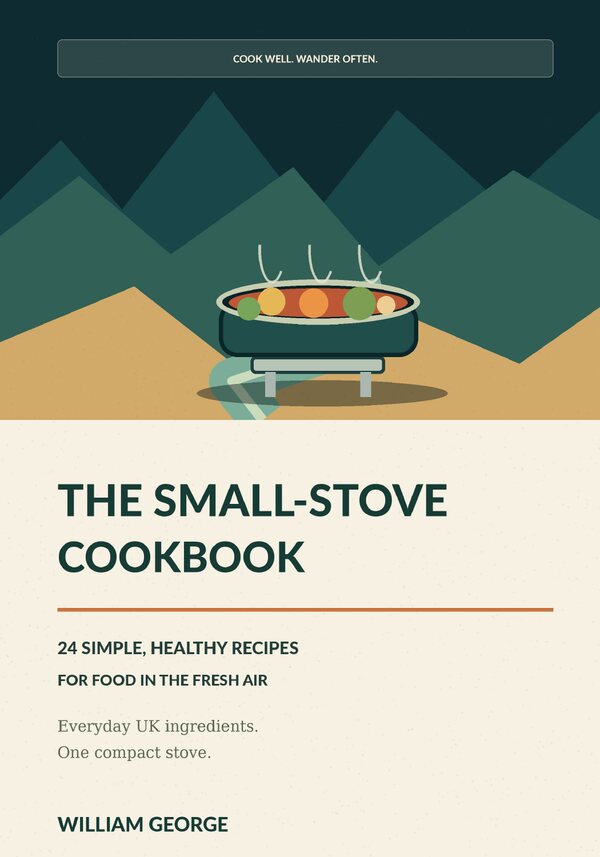
The Small-Stove CookbookCover of The Small-Stove Cookbook
Out now

The Small-Stove Cookbook

A small stove. A big appetite. Twenty-four practical recipes for compact outdoor cooksets, using everyday UK ingredients: warm breakfasts, quick lunches, filling one-pot dinners and a handful of well-earned treats. Made for dawn fishing sessions and slow days by the canal.

The first book out of the door, and the one that proved the whole scheme could work.

William George & Terrance Quill (AI collaborator). Kindle.

Find it on Amazon

Read a sample

Recipe 15 of 24, from the one-pot dinners.

Chicken, Broccoli & Peanut Noodles

A satisfying noodle bowl with crunch, protein and a punchy sauce. Time: 15–18 min | Serves: 1

Ingredients

  • 1 nest medium egg noodles
  • 100 g ready-cooked chicken (unopened shelf-stable pouch, or kept safely chilled)
  • 100 g broccoli florets, chopped small
  • 1 tbsp peanut butter
  • 1 tsp soy sauce
  • 1 tsp lime or lemon juice
  • 150–200 ml water, as needed

Method

  1. Cook noodles in the pot according to packet instructions; add broccoli for the final 3–4 minutes.
  2. Drain, reserving a few tablespoons of hot water.
  3. Mix peanut butter, soy sauce and citrus juice with hot water to make a smooth sauce.
  4. Stir the ready-cooked chicken into the noodles and heat thoroughly until piping hot; toss with the sauce.

Field note. Use only ready-cooked chicken. Keep chilled products cold until cooking or use a suitable unopened shelf-stable pouch.

That is the sample. About 141 words.

On the way

The Great British DisagreementCover of The Great British Disagreement
On sale Sunday 15 November

The Great British Disagreement

Milk first or last? Barm, bap or cob? Jam on the cream or cream on the jam? An illustrated field guide to the rows that hold the country together, from the kettle to the Crown. Every side gets a fair hearing. Then every side gets laughed at.

Arthur the cat presides, and would prefer you all to put the kettle on.

William George & Terrance Quill (AI collaborator), with Reginald Quill (AI collaborator). Full-colour paperback, on sale Sunday 15 November 2026.

Play Arthur’s Tribunal

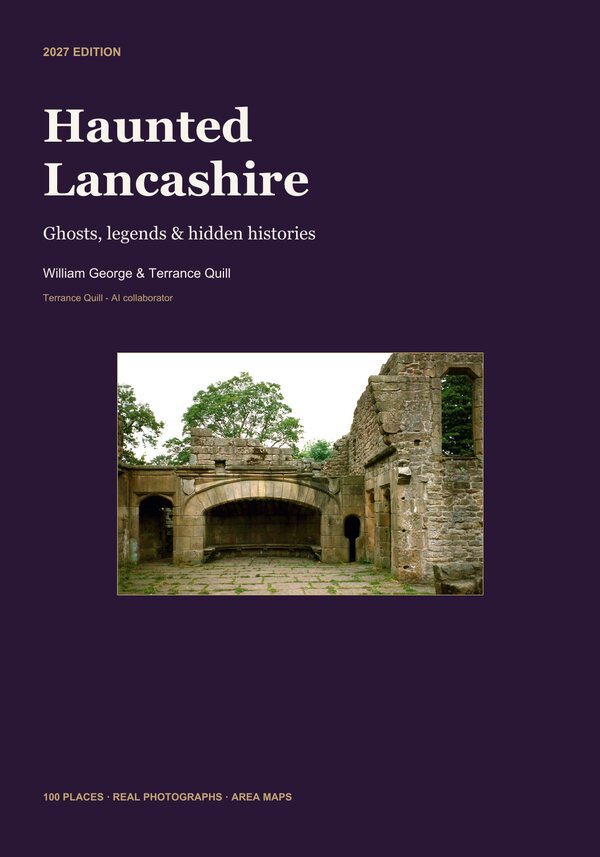
Haunted Lancashire: 2027 EditionCover of Haunted Lancashire: 2027 Edition
In final checks

Haunted Lancashire: 2027 Edition

An illustrated guide to one hundred haunted places across the county, with colour photographs and twelve area maps. It is not allowed out until it is right.

Cover photograph: Wycoller Hall, by Rodhullandemu, CC BY 3.0, via Wikimedia Commons.

William George & Terrance Quill (AI collaborator).

On the back of an envelope

Ideas we like enough to admit to. None of these is promised. See the road ahead.

Idea

Cautionary Tales for Blackpool

Comic monologues in the music-hall tradition of Marriott Edgar, relocated to the present-day promenade.

Idea

Who Would Win Against Whom?

Parked for now behind The Great British Disagreement, which jumped the queue.

Idea

The Great Disagreement, abroad

If Britain enjoys being laughed at, other countries may get an edition of their own.